Working Multiple Freelance Jobs: How to Manage Your Time
Master time management for multiple freelance jobs with proven strategies, tools like Asana and Trello, and productivity techniques to avoid burnout.

Juggling multiple freelance jobs has become the new reality for millions of independent professionals worldwide. The allure of freelancing lies in its promise of freedom—work whenever you want, from wherever you choose, with complete control over your schedule. However, the reality of managing multiple gigs tells a different story. Freelancers rapidly discover that balancing various projects, diverse client expectations, and varying deadlines requires far more structure than a traditional 9-to-5 employment. The misconception that freelance work means unlimited flexibility without constraints often leads to overwhelmed schedules, missed deadlines, and the looming specter of burnout.
Statistics reveal that over 36% of the U.S. workforce engaged in freelancing full-time in recent years, each facing the same challenge: how to allocate limited hours across competing demands effectively. Without a solid time management strategy for multiple freelance projects, even the most talented professionals find themselves drowning in unfinished tasks, unanswered client messages, and persistent stress. The difference between thriving freelancers and those struggling toward burnout isn’t talent or work ethic—it’s implementation of proven time management techniques and organizational systems.
This comprehensive guide explores practical, actionable strategies for managing freelance workload efficiently, introduces essential productivity tools for freelancers, and reveals how successful independent professionals structure their days to maintain quality output while protecting their mental health. Whether you’re juggling three clients or thirteen, this article provides the roadmap for balancing multiple freelance jobs with confidence, clarity, and sustainable success.
The Challenges of Multiple Freelance Jobs
Managing multiple freelance jobs presents unique obstacles that traditional employment never encountered. Unlike salaried positions with predetermined tasks and set working hours, freelance projects fluctuate dramatically in scope, timeline, and complexity. One week might overflow with urgent deadlines from multiple clients simultaneously, while the next week remains eerily quiet, leaving you scrambling to maintain adequate income. This unpredictability demands sophisticated workload management systems that accommodate both feast-or-famine scenarios.
Beyond project juggling, freelancers wear numerous hats simultaneously. You’re not just executing the creative work—designing, writing, coding, or consulting—you’re simultaneously handling invoicing, client communication, marketing, contract negotiation, and administrative tasks. These non-billable responsibilities consume significant hours but prove essential for business sustainability. The true challenge of freelance time management encompasses both client-facing deliverables and behind-the-scenes operations that traditional employees never manage.
Additionally, managing multiple clients introduces psychological complexity. Each client expects personalized attention, prompt communication, and their project as your top priority. Balancing these competing expectations while maintaining consistent quality across all concurrent projects requires strategic prioritization and clear communication. Without proper systems, you risk damaging client relationships through missed deadlines, inconsistent communication, or declining work quality—consequences that directly impact future income and professional reputation.
Prioritization: The Foundation of Successful Freelance Time Management
Effective time management for multiple freelance projects begins with disciplined prioritization. The Eisenhower Matrix offers a proven framework for categorizing tasks into four quadrants based on urgency and importance: tasks that are both urgent and important demand immediate attention, such as approaching client deadlines; important but non-urgent work includes skill development and business growth initiatives; urgent but less important activities often involve interruptions and administrative tasks; finally, neither urgent nor important tasks represent time-wasting activities requiring elimination.
Applying this framework to managing multiple gigs prevents you from constantly firefighting crises. Too many freelancers default to handling whatever feels most urgent in the moment, regardless of actual importance. Client emails trigger immediate responses, interrupting focused work on critical deliverables. Emergency revisions jump the queue, displacing planned progress on higher-value projects. By intentionally categorizing your multiple freelance jobs using this matrix, you escape the tyranny of urgency and work deliberately toward meaningful outcomes.
Beyond the Eisenhower approach, implementing task prioritization requires honest assessment of deadlines, client importance, and project profitability. Not all projects warrant equal investment of your time and energy. A high-paying, straightforward project with cooperative clients deserves different treatment than a lower-paying engagement with demanding revisions. A monthly review of your freelance workload against profitability metrics ensures your time allocation serves your financial goals.
Creating a Structured Schedule for Multiple Assignments
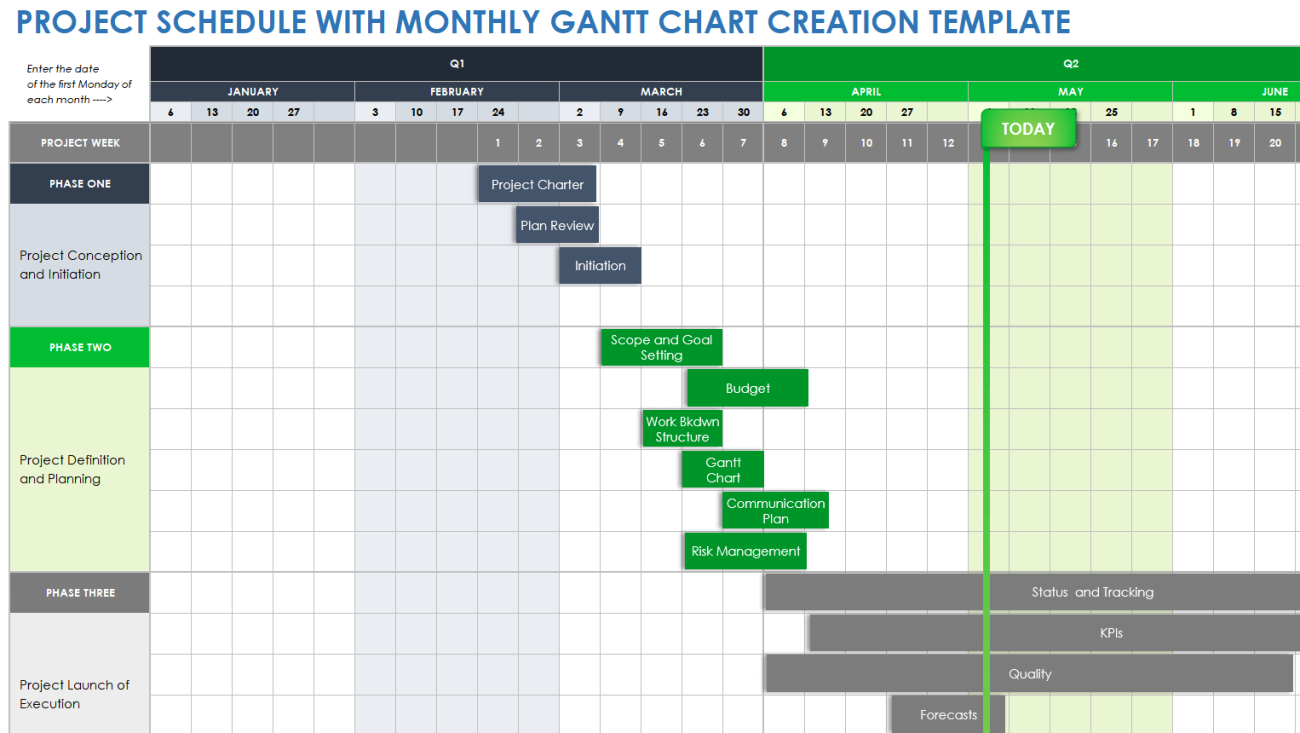
One of the most critical aspects of freelance time management involves establishing a consistent work schedule despite the flexibility freelancing provides. While traditional employment imposes structure externally, managing multiple freelance jobs requires you to create internal discipline through intentional schedule design.
The most successful freelancers establish defined work hours—not identical daily, but predictable within reason. This might mean working 6 AM to 2 PM three days weekly on Project A, then 3 PM to 9 PM on Project B on other days. The specific arrangement matters less than consistency. Clients who know your typical availability adapt their expectations accordingly. Similarly, your brain performs optimally when work patterns remain somewhat regular; shifting wildly between different working hours each day degrades both productivity and sleep quality.
Time blocking, a fundamental productivity technique, assigns specific hours to specific projects. Rather than switching constantly among multiple gigs, you might dedicate 9-11 AM exclusively to Client A’s content writing, 11 AM-1 PM to Client B’s design work, and 2-4 PM to Client C’s consulting project. This approach leverages the cognitive advantages of deep work—your brain reaches peak efficiency when focused on a single task type rather than context-switching. Studies demonstrate that context-switching between unrelated tasks destroys productivity far more than commonly realized, with the cost compounding across multiple assignments.
For freelancers managing concurrent projects, the to-do list proves essential but requires strategic implementation. Creating your to-do list the evening before, rather than frantically each morning, provides psychological advantages. You’ll sleep better knowing tomorrow’s priorities are documented, and you’ll start work immediately productive rather than spending 30 minutes deciding where to begin.
Leveraging Project Management Tools for Freelance Success
The digital age provides unprecedented advantages for freelancers managing multiple projects. Dedicated project management tools transform chaotic email threads and scattered notes into organized, centralized systems where all project information lives in one accessible location.
- Asana and Trello represent the two dominant project management platforms for freelancers, each with distinct strengths. Trello employs Kanban-style visual boards where tasks appear as cards you drag between columns (To-Do, Doing, Done), reflecting workflow progress. This simplicity makes Trello ideal for freelancers with linear processes and smaller project counts. The visual representation provides immediate clarity on project status at a glance. Trello’s free version accommodates unlimited team members and boards, making it cost-effective for solopreneurs managing multiple freelance jobs.
- Asana, by contrast, offers more structured project management suitable for complex multi-project management. Beyond Kanban boards, Asana provides list views, timeline views, and calendar views—allowing you to visualize projects by due date, dependencies, and project phases. The platform excels when you need to track task dependencies, assign subtasks, and manage projects involving multiple workflow stages. Features like custom fields, automation rules, and advanced reporting empower freelancers with multiple clients to extract detailed insights into time allocation and project progress.
Both platforms integrate seamlessly with communication tools like Slack, Google Drive, and email, ensuring project management flows naturally into your existing workflow rather than creating additional friction. The critical factor isn’t choosing the “best” tool—it’s selecting the platform matching your specific workflow and actually using it consistently.
Time tracking tools complement project management systems by revealing where your hours actually go. Many freelancers complete assignments feeling thoroughly exhausted, yet lack clarity on how much time specific projects require. Tools like Clockify or Toggl solve this through simple timer-based tracking. By recording time spent on each freelance job, you develop accurate estimates for future projects, identify surprisingly time-consuming tasks, and ensure you’re charging appropriately for your freelance services. This data proves invaluable when renegotiating rates or deciding which multiple clients deserve continuation versus discontinuation.
Setting Boundaries and Saying No
No single word impacts time management for multiple freelance jobs more powerfully than “no.” Yet many freelancers struggle with boundary-setting, particularly early in their careers when financial insecurity makes every opportunity feel essential.
Strategic refusal of incompatible work protects both your income and sanity. If you can realistically handle five concurrent projects without quality degradation or excessive stress, then accepting a sixth project doesn’t yield 20% additional income—it reduces quality across all multiple assignments, potentially damaging client relationships and future earning capacity. Know your threshold and defend it rigorously.
Boundaries extend beyond project acceptance to communication patterns. Define your working hours and communicate them explicitly to clients. If you don’t respond to emails after 6 PM, say so. If you don’t work weekends, establish that standard. Clients adapt to your patterns when expectations are clear; they’ll constantly encroach if they perceive you’re always available.
Similarly, establish policies around revision counts, communication channels, and approval timelines. “I provide two rounds of revisions; additional revisions are billed at an hourly rate” prevents endless tweaks from destroying profitability. “I respond to emails within 24 business hours” allows batching communications rather than constant interruption. These boundaries protect both your time and the client relationship by establishing professional standards.
Avoiding Burnout While Managing Multiple Gigs
The freedom of freelancing with multiple jobs creates invisible burnout risk. Without a manager monitoring workload or enforcing organizational policies, you’re entirely responsible for protecting your own well-being. Yet many freelancers convince themselves that breaks are luxuries, that pushing through fatigue builds character, that accepting every opportunity demonstrates commitment.
The reality proves opposite. Burnout destroys productivity far more than rest does. When fatigued, you reread sentences multiple times without comprehension, make careless errors requiring rework, and lose creative problem-solving abilities. You might work twelve hours yet accomplish what a well-rested person finishes in eight. More critically, burnout corrodes your passion for work itself, transforming something you initially chose into a grinding obligation.
Protecting yourself requires non-negotiable rest. Take short breaks every couple of hours—even 10 minutes of stretching, breathing, or stepping outside resets mental focus. Take full days off regularly. Your brain needs recovery time just as your muscles do. Many successful freelancers schedule specific days off weekly, treating them as unmovable appointments rather than luxuries to squeeze in later.
Additionally, remove distractions competing for attention during work hours. Social media scrolling, news checking, and entertainment streaming consume time without providing genuine rest—they’re pseudowork disguised as breaks. True restoration comes from genuine disconnection: walk outside, read physical books, spend time with loved ones, exercise. These activities restore mental energy in ways that doom-scrolling never achieves.
Monitor your energy levels and workload constantly. If you find yourself perpetually exhausted, missing deadlines due to fatigue rather than complexity, or losing enthusiasm for projects you initially enjoyed, these signal burnout warning signs requiring immediate action.
Effective Communication Across Multiple Client Relationships
Clear communication forms the glue holding successful freelance management together. When managing multiple projects with different clients, miscommunications multiply exponentially. You might forget you promised Client A a Tuesday deadline when Client B’s emergency demands your Tuesday attention.
Combat this through proactive communication. Establish standard response times and communicate them upfront. “I respond to messages within 24 hours” sets realistic expectations and prevents clients from assuming you’re ignoring them when you don’t reply within minutes. Document project expectations, deliverables, revision policies, and timelines in writing. Email these details after initial discussions, and reference them if scope creep or timeline shifts arise later.
Maintain consistent communication without falling into the trap of constant availability. Bad communication includes both ignoring clients for days and being so immediately responsive that clients begin expecting instant reactions. Professional communication means reliable patterns—if you always respond within 24 hours, clients will plan accordingly rather than frantically emailing multiple times daily expecting immediate attention.
Additionally, proactively communicate when you’re falling behind schedule. Clients nearly universally prefer honest “this will be delayed” messages before deadlines pass to discovering missed deadlines through silence. Explain the reason briefly and provide a realistic new timeline. Respecting client time through advance notice maintains relationships far better than meeting impossible deadlines that compromise quality.
Automation and Delegation Strategies for Freelancers

You cannot automate creative work—the actual core of your freelance services—but you absolutely can automate surrounding administrative tasks. Every hour spent on automatable work is an hour stolen from billable projects or personal restoration.
Email management provides obvious automation opportunities. Set up filters directing client messages to specific folders, create templates for common responses, and schedule batch email processing twice daily rather than constant monitoring. If you send similar emails to new clients explaining your process, create a template and customize each one rather than writing from scratch repeatedly.
Invoicing, another tedious necessity, benefits from complete automation. Accounting software like QuickBooks or FreshBooks automatically generates invoices from tracked time or project completion, reducing invoicing from 30-minute manual creation to instant automated generation. Payment reminders can be automatically triggered for overdue invoices, eliminating the uncomfortable task of requesting payment.
Social media updates, newsletter sending, and marketing task automation through tools like Zapier or IFTTT generate consistent client outreach without daily manual effort. If you maintain a newsletter, schedule batches of content simultaneously rather than writing and sending each week individually.
For more complex tasks exceeding your expertise or consuming excessive time despite automation efforts, consider selective delegation to freelancers. This might involve hiring a virtual assistant for administrative work, outsourcing bookkeeping to an accountant, or hiring a contractor for non-core work. While delegation increases expenses, if it enables you to accept higher-paying projects, the return on investment proves positive.
Measuring Productivity and Progress in Freelance Work
Successful freelance time management requires measuring what actually matters rather than mere busyness. Many freelancers feel perpetually overwhelmed despite working excessively, lacking visibility into whether their time allocation serves their goals.
Establish metrics reflecting your priorities. For freelancers focused on income, track total billable hours, revenue per hour by client, and profitability per project. For those prioritizing work-life balance, track hours worked weekly, days off achieved, and work-after-hours incidents. For career builders, track skill development investments, new client leads generated, and portfolio-worthy projects completed.
Regular reviews—monthly minimum—compare actual performance to targets. You’ll discover that Client A consistently generates fewer billable hours per week despite seeming busy, suggesting you’re over-servicing them relative to payment. Project B consumed 25 hours while earning only $400, indicating underpricing that should be corrected for future similar work. Time blocking sounds good, but actually requires 45 minutes daily shifting between projects rather than the anticipated 15 minutes, signaling a need for adjustment.
Data-driven tracking also reveals energy patterns. You might discover you’re most creative and productive between 7-11 AM, so suggest scheduling deep work during these peak hours and deferring administrative tasks to afternoon slowdown periods. Or you might notice that switching among four different projects daily destroys productivity compared to dedicating full days to single clients.
Creating a Sustainable Freelance Career
Building lasting success with multiple freelance jobs requires viewing your career as a marathon rather than a sprint. Short-term maximization—accepting every project, working 60-hour weeks, eliminating breaks—might generate impressive income temporarily, but sustainability suffers.
Sustainable freelance career building involves regular business assessment. Quarterly reviews examining which clients generate the most profit, which projects energize you versus drain you, which skills prove most marketable, and which rates prove insufficient provide crucial guidance. Over time, this data shapes a deliberate business strategy: perhaps you phase out low-paying clients, specialize in highly profitable niches, raise rates across the board, or transition toward project-based pricing instead of hourly rates.
Similarly, invest continuously in skill development and professional growth. Dedicate a small percentage of working time—perhaps 5-10%—to learning new skills, attending industry conferences, building your professional network, or creating portfolio work. This investment seems like a productivity loss in the short term, but compounds into competitive advantages over the years.
Protect your health as fiercely as your schedule. Regular exercise, adequate sleep, nutritious eating, and stress management practices aren’t indulgences—they’re infrastructure supporting sustainable high performance. Freelancers who treat their bodies as critical business assets outperform those who sacrifice health for short-term productivity.
Also Read: Best Paying Freelance Jobs on Upwork in 2025
Conclusion
Managing multiple freelance jobs successfully requires implementing strategic systems, utilizing modern productivity tools, establishing clear boundaries, and ruthlessly prioritizing what genuinely matters. The most successful independent professionals aren’t those who work longest but those who work most intentionally—applying proven time management techniques like the Eisenhower Matrix, time blocking, and project management platforms such as Asana and Trello to organize their workload effectively.
Rather than succumbing to the allure of endless availability and attempting to please every client equally, sustainable freelance career success emerges from honest assessment of your capacity, deliberate refusal of incompatible work, and consistent execution of systems designed to protect both productivity and well-being. By implementing these strategies—prioritizing ruthlessly, scheduling deliberately, communicating clearly, automating repetitive tasks, and measuring what matters—you transform multiple freelance projects from chaotic juggling into an organized, sustainable practice.
The path from an overwhelmed freelancer constantly firefighting crises to a confident professional managing thriving multiple clients simultaneously doesn’t require superhuman effort; it demands thoughtful strategy, proven systems, and commitment to sustainable practices over burnout-inducing heroics. Start implementing these approaches immediately, measure your results monthly, and continuously refine your process as your career and capacity evolve.